

The Academy of Motion Picture Arts and Sciences continues to become a more global institution.
Late last month, the Academy invited
529 new members to join its ranks, with
53% coming from 60 countries and territories outside the United States. Under Academy CEO
Bill Kramer and Academy President
Lynette Howell Taylor, the organization continues to broaden international representation while recognizing filmmaking from around the world.

That commitment became even clearer on May 1, when the Academy announced one of the most significant changes in the history of the Best International Feature Film category.
For decades, a country's Oscar hopes rested almost entirely on one decision: which film its national committee chose to submit.
Outstanding films could win major international festivals, receive worldwide acclaim, and still never have the opportunity to compete for the Academy Award for Best International Feature simply because another title had been selected.
The new rules change that.
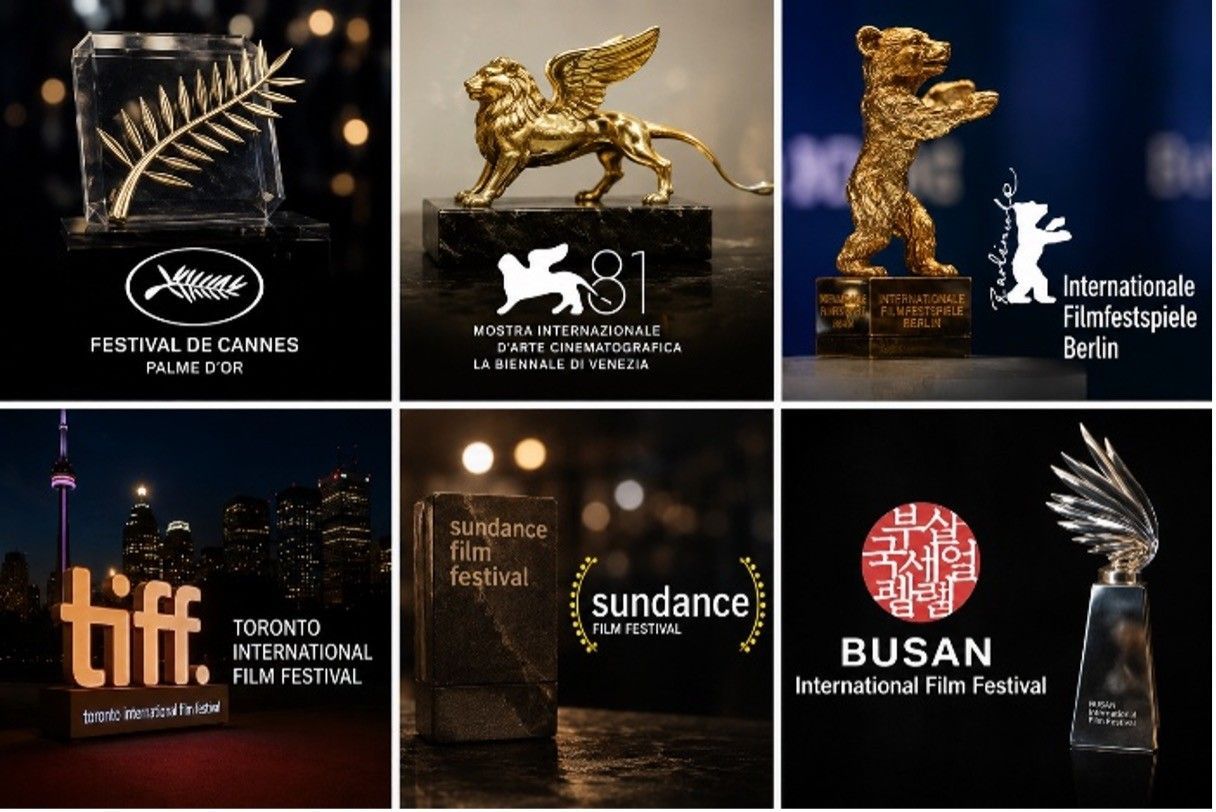
In addition to a country's official submission, films can now qualify by winning one of six designated awards at major international film festivals: the Palme d'Or at Cannes, the Golden Lion at Venice, the Golden Bear at Berlin, the Platform Award at Toronto, the World Cinema Grand Jury Prize at Sundance, and the Best Film Award at Busan.
It is one of the most significant expansions of the category since it was created, creating a second pathway to Oscar consideration for internationally acclaimed films.
Combined with its increasing international membership, the message is clear:
Films made primarily in languages other than English have never had a stronger discussion into the Oscar conversation.
Yet while the Academy has changed the rules, the marketplace has not.
The U.S. remains the world's largest film market, and for many international producers, distributors, sales companies, financiers, and filmmakers, producing in English has long been viewed as the best entry to secure financing, attract wider distribution, and reach the broadest possible audience.
Today, the Academy and the marketplace appear to be sending filmmakers two very different messages.
The Academy is creating stronger incentives for films to remain primarily in languages other than English.
The marketplace continues to reward English language productions.
For decades, many international filmmakers have believed they had to choose between those two paths.
That raises an important question.
If the Academy is expanding opportunities for films made primarily in languages other than English, why are so many international filmmakers still choosing English?
Following Cannes 2026, I wrote about this question after noticing what appeared to be an increasing number of internationally acclaimed filmmakers producing films in English or with substantial English language dialogue while telling stories deeply rooted in their own countries, cultures, and identities.
The Academy's recent announcements make that observation even more relevant today.
Cristian Mungiu's Palme d'Or winning Fjord illustrates how quickly this conversation has evolved.
Following its Cannes premiere, critics and audiences questioned whether the film contained too much English dialogue to qualify for the Academy Award for Best International Feature. Last week, Variety confirmed that Fjord satisfies the Academy's language requirements, with more than 50% of its dialogue in Romanian, Norwegian, and Swedish. Because it won the Palme d'Or, it now qualifies under the Academy's new festival pathway without relying solely on a country's official submission.
Ironically, the biggest story wasn't whether Fjord qualified.
It was that everyone was asking the question.
That conversation reflects a broader shift taking place across the international film business.
For decades, filmmakers believed they had to make one critical decision before production even began.
Original language or English. Awards eligibility or broader audience reach.
But what if they no longer had to choose?
What if a film could first be created exactly as the filmmaker intended remaining in its original language for domestic audiences, festivals, and Academy eligibility while also existing as a separate English language version for audiences who rarely watch subtitled films?
Not a remake. Not a different cast. Not a different screenplay. Not a different director.
Simply another way to experience the same film.
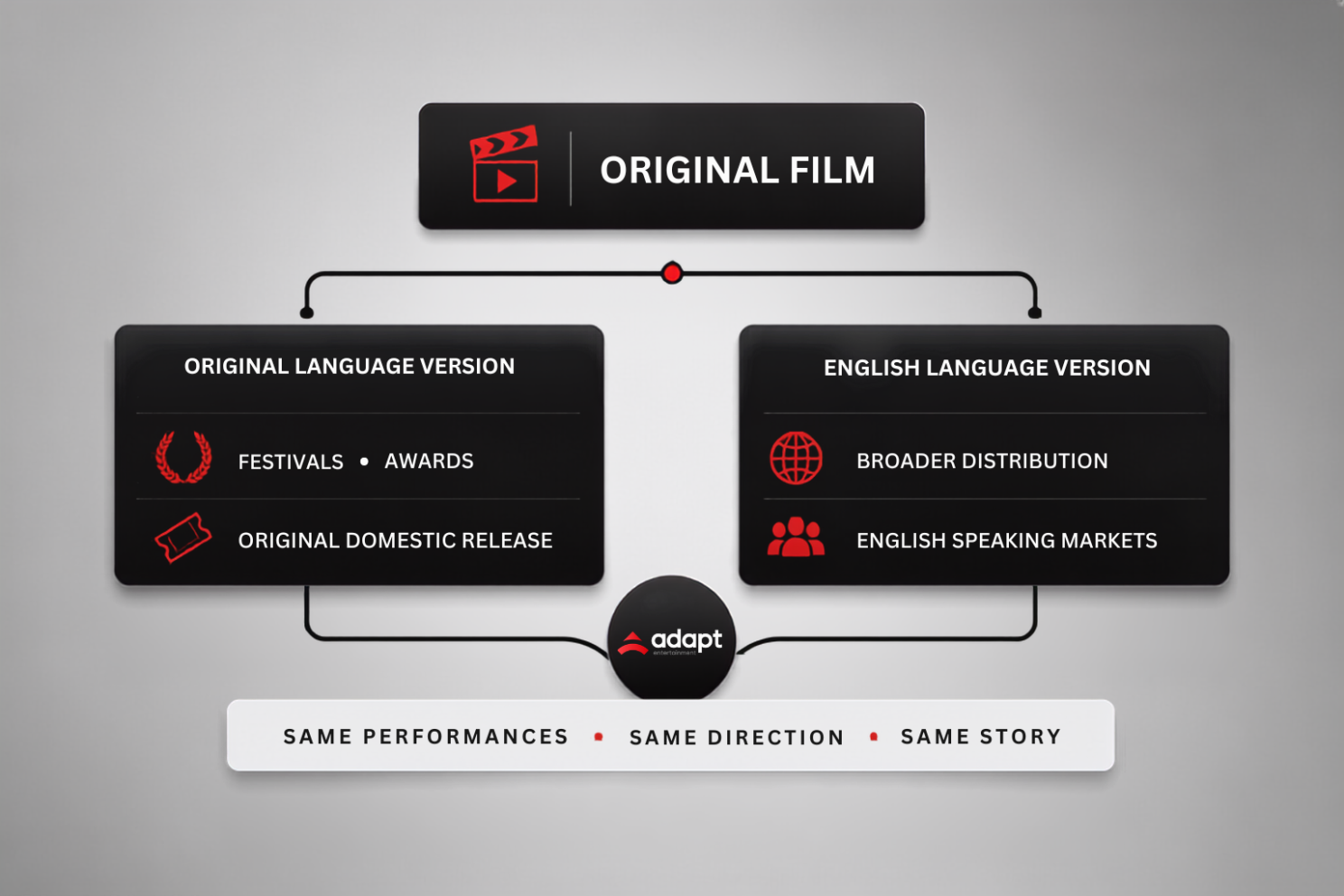
At Adapt Entertainment, we've spent several years exploring exactly that possibility.
Rather than asking filmmakers to make that decision before production begins, we've developed a process that allows a completed international film to exist in two versions, one preserving the original language experience, the other created specifically for English speaking audiences.
Over the past several years, we've created English language versions of international films for a major global streaming platform. While confidentiality agreements prevent us from identifying those titles publicly, several became among the platform's top-performing international releases, with audience engagement significantly exceeding comparable foreign-language films.
What surprised us most wasn't simply the audience size. It was the audience response.
Many viewers reported they had no idea they were watching films originally produced in another language.
That reinforced something we've long believed.
The challenge isn't the storytelling.
It's helping more audiences discover it.
One example is
The Champion, the Polish German World War II drama directed by
Maciej Barczewski and based on the true story of Auschwitz prisoner and boxer
Tadeusz "Teddy" Pietrzykowski. Released last month across Apple TV, Prime Video, Fandango, Google TV and YouTube in a new English language version.
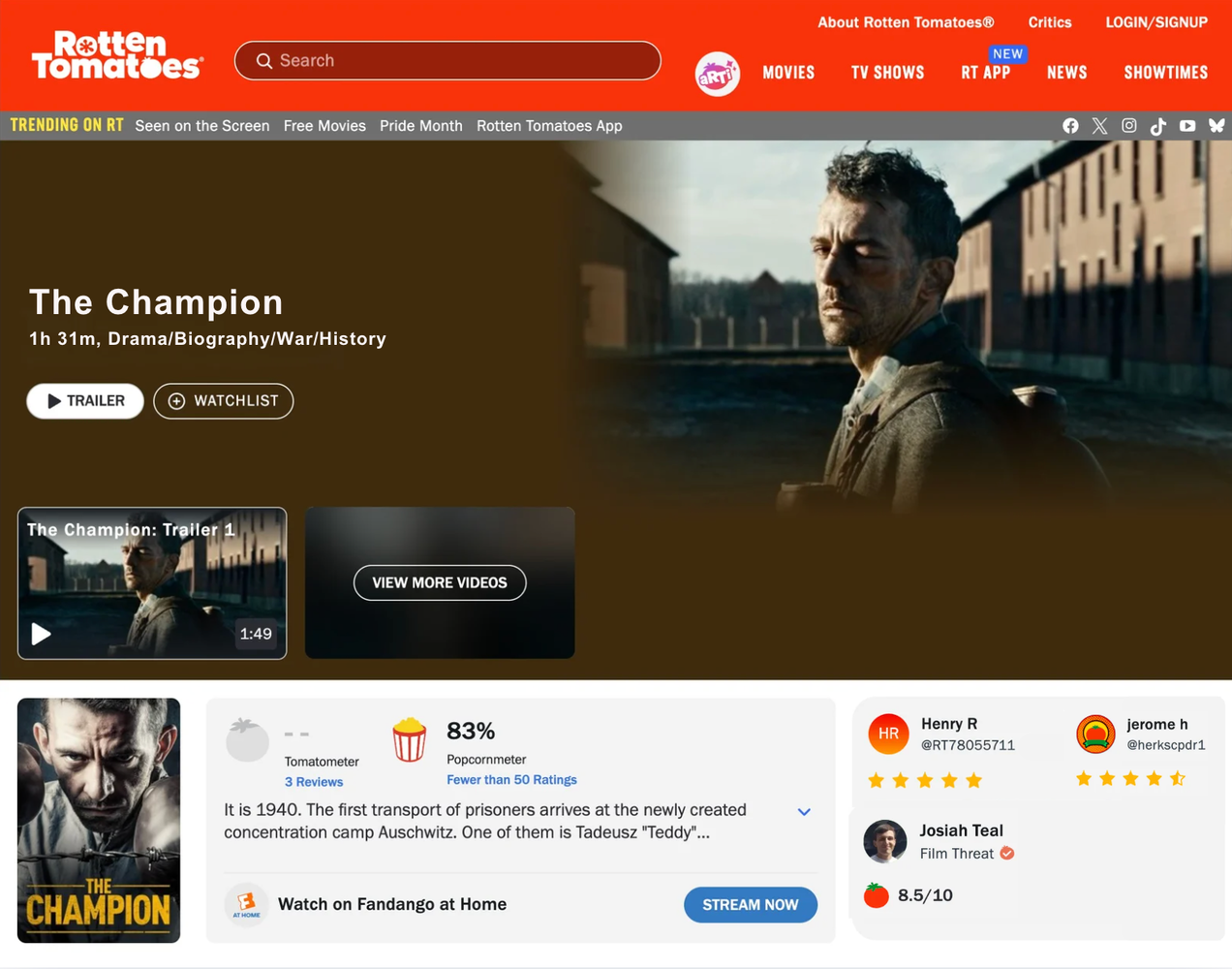
One Rotten Tomatoes reviewer wrote that they initially believed the film had been produced in English before discovering it had been adapted.
That reaction reinforced something important. The original film remains intact. So does the original cast, original performances, direction, cinematography, editing, music and the creative vision. Only the language changes.
For filmmakers, that creates something more valuable than another distribution opportunity. It creates another option.
The original language version can remain exactly as it was created for domestic audiences, festivals, and awards consideration.
A separate English language version can serve audiences who otherwise might never discover the film.
The goal isn't to replace original language cinema. It's to help more original language films reach more people.

The Academy's recent rule changes reflect something many of us have believed for years.
International storytelling is no longer a niche part of the film industry. It is central to its future.
The Academy has changed the rules. The marketplace hasn't.
One is creating stronger incentives for films made primarily in languages other than English. The other continues to reward English language production.
For decades, international filmmakers have often believed they had to choose between those two objectives.
Perhaps they no longer do. Perhaps the future isn't about choosing one over the other. Perhaps, with Adapt Entertainment, they no longer have to.
We believe filmmakers should never be forced to choose between preserving the authenticity of their work and maximizing its global potential. Adapt Entertainment gives creators the freedom to tell the story they want to tell and the opportunity to share it with the world.
For the first time, authenticity and accessibility no longer have to compete. They can work together.