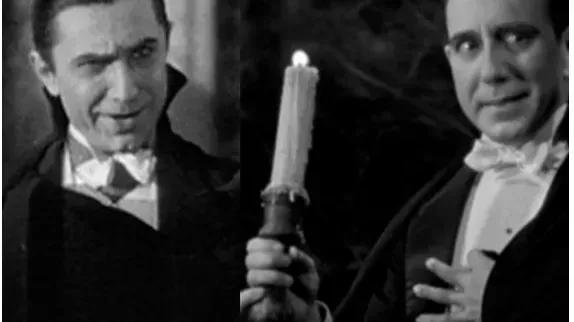
One of the things I enjoy most about the film industry is discovering that many of today's "new" ideas are often old ideas returning in a different form. Over the weekend, I was reminded of that after reading two articles published just days apart. The first described a collaboration between actor-director Gerald Fillmore, Spanish production company LyO Media, and financier Filmika Audiovisual to produce both English and Spanish language versions of each feature by filming every scene twice with the same cast, beginning with their first film, Face Love (Amor En Toda La Cara). Almost simultaneously, Variety published a review of Los Vampires, a new film inspired by one of Hollywood's most fascinating production stories. In 1931, Universal Pictures tackled the challenge of international distribution by producing two versions of Dracula on the same sets. During the day, Tod Browning directed Bela Lugosi in the now iconic English-language version.
The Academy of Motion Picture Arts and Sciences continues to become a more global institution. Late last month, the Academy invited 529 new members to join its ranks, with 53% coming from 60 countries and territories outside the United States. Under Academy CEO Bill Kramer and Academy President Lynette Howell Taylor, the organization continues to broaden international representation while recognizing filmmaking from around the world.
I noticed a trend across several high profile Cannes films this year. A number of acclaimed international filmmakers presented films that were either widely reported as English language productions or appeared to include substantial English language dialogue, even when the stories themselves were deeply rooted in their own countries, cultures, and languages. That raises an interesting question: Are filmmakers increasingly choosing English language productions to solve a distribution challenge that may no longer exist? Historically, international filmmakers seeking English speaking audiences faced difficult choices. They could rely on subtitles, traditional dubbing, or produce English language versions from the outset. While English language productions may offer broader commercial opportunities, they can also affect awards eligibility and require creative decisions driven by market realities rather than artistic considerations. That dilemma is becoming increasingly important.